
Creating Synergy in Blends
When blending essential oils, it is important to create synergy among the different oils to maximize their therapeutic benefits. Synergy is the interaction between the oils that enhances their individual properties and creates a harmonious blend. By understanding how to create synergy in blends, you can customize your own unique combinations that address specific health concerns or simply create pleasant aromas.
To create synergy in blends, consider the aroma, therapeutic properties, and intensity of each essential oil being used. Start by choosing a base note oil, which will provide a solid foundation for the blend. Next, add middle note oils, which will balance the blend and add complexity. Finally, incorporate top note oils for a finishing touch and to provide a pleasant aroma that is immediately noticeable. Experiment with different combinations and ratios to find the perfect synergy for your blends.
Key Factors for Achieving Synergy in Essential Oil Blends
To ensure true synergy in blending, consider the following elements:
1. Therapeutic Actions & Chemical Composition
When blending for therapeutic purposes, it is important to understand the primary chemical constituents of essential oils and how they interact. Different chemical families offer specific therapeutic properties:
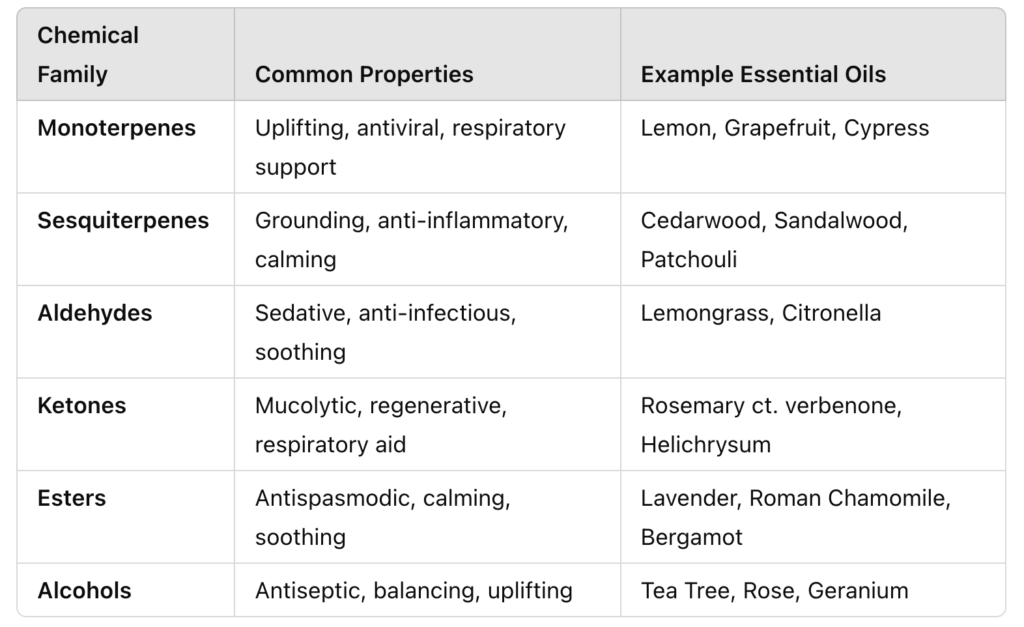
By combining oils with complementary therapeutic properties, you can create powerful, targeted blends for specific concerns such as stress relief, respiratory health, digestion, or sleep support.
2. Aromatic Balance: The Role of Scent Notes
The harmony of a blend depends on how the top, middle, and base notes interact. A well-rounded blend ensures that the aroma unfolds smoothly over time, offering both immediate appeal and long-lasting depth.
- Top Notes: Quick-evaporating oils that provide the first impression; fresh, citrusy, or minty (e.g., Lemon, Eucalyptus, Peppermint)
- Middle Notes: The “heart” of the blend that ties the other notes together; floral, herbal, or spicy (e.g., Lavender, Rosemary, Geranium)
- Base Notes: Long-lasting, grounding oils that provide depth and stability; earthy, woody, or resinous (e.g., Sandalwood, Patchouli, Vetiver)
A structured approach like the 30-50-20 blending rule can help create a balanced synergy:
🔹 30% Top Notes – Immediate impact, fresh & uplifting
🔹 50% Middle Notes – The main body, therapeutic depth
🔹 20% Base Notes – Long-lasting foundation, grounding
Example Blend for Stress Relief:
- Top Note: 3 drops Bergamot (uplifting, calming)
- Middle Note: 5 drops Lavender (balancing, sedative)
- Base Note: 2 drops Sandalwood (grounding, relaxing)
This ensures the blend is aromatically pleasant and therapeutically effective.
3. Oil Intensity & Blending Ratios
Some essential oils have strong, overpowering aromas or therapeutic effects and must be blended with dilution and intensity in mind.
Guidelines for balancing intensity:
- Mild oils
- (e.g., Lavender, Sweet Orange) can be used in higher concentrations.
- Potent oils
- (e.g., Peppermint, Clove, Cinnamon) should be used sparingly.
- Fixative oils
- (e.g., Vetiver, Frankincense) help anchor and slow evaporation.
💡 Tip: If a blend feels too strong, add a neutral middle note like Geranium or Roman Chamomile to soften the profile.
4. Dilution & Safety Considerations (NAHA Standards)
Proper dilution is crucial for safety, especially when applying blends topically. NAHA recommends the following dilution guidelines for various applications:
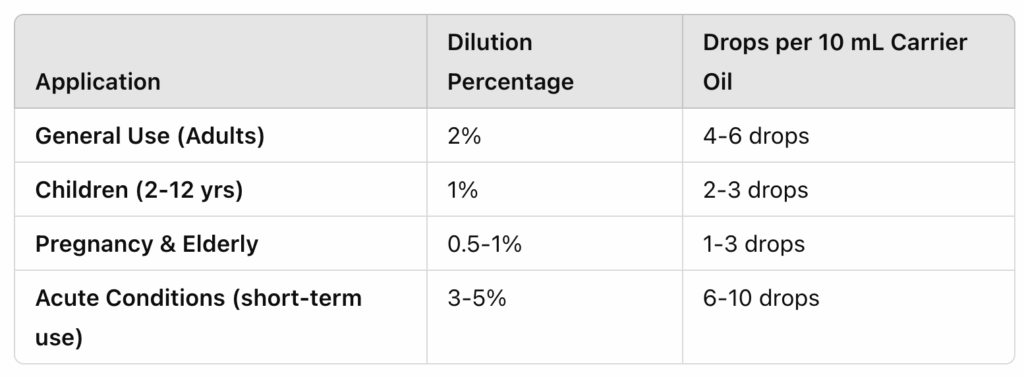
⚠ Safety Reminders:
- Avoid photosensitive oils (e.g., Bergamot, Lemon) before sun exposure.
- Use skin irritants (e.g., Cinnamon, Clove) in lower dilutions.
- Certain oils should be avoided in pregnancy (e.g., Basil, Wintergreen).
Creating Personalized Blends for Specific Concerns
Here are some therapeutically focused blends that incorporate synergy principles:
✔ Respiratory Support Blend:
- 3 drops Eucalyptus (expectorant, clears airways)
- 5 drops Lavender (calms inflammation)
- 2 drops Cedarwood (grounding, supports lungs)
✔ Sleep & Relaxation Blend:
- 3 drops Roman Chamomile (calming)
- 4 drops Lavender (sedative)
- 3 drops Sandalwood (deep relaxation)
✔ Immunity Boosting Blend:
- 3 drops Tea Tree (antimicrobial)
- 3 drops Lemon (immune support)
- 4 drops Frankincense (anti-inflammatory, grounding)
By experimenting with different combinations and ratios, you can customize effective, well-balanced essential oil blends that align with individual needs and preferences.
Conclusion: The Art & Science of Synergy
Mastering synergy in blending requires an understanding of:
✔ Therapeutic chemistry
– Selecting oils based on their active constituents
✔ Aromatic layering
– Balancing top, middle, and base notes for longevity
✔ Intensity control
– Adjusting ratios for a harmonious scent profile
✔ Safe dilution
– Ensuring appropriate use based on NAHA guidelines
By applying these principles, you can create blends that are effective, safe, and beautifully balanced. Whether for personal use or professional aromatherapy practice, this knowledge will help you develop expertise in the art and science of essential oil blending.