
Dilution Ratios and Guidelines
Understanding the proper dilution ratios and guidelines when blending essential oils is crucial to ensure the safety and efficacy of your blends. Dilution ratios refer to the amount of essential oil that should be mixed with a carrier oil or other base ingredients to achieve the desired potency without causing any adverse reactions on the skin.
It’s important to follow recommended dilution guidelines to avoid skin irritation or sensitization. General guidelines suggest using a 1-2% dilution for facial products, 2-3% for body products, and up to 5% for spot treatments. However, some essential oils may require even lower dilution ratios, especially if they are known to be more potent or have a higher risk of causing skin irritation.
When in doubt, always start with a lower dilution ratio and gradually increase as needed. Keep in mind that everyone’s skin is different, so it’s essential to patch test your blends on a small area of skin before applying them to larger areas of the body. By following proper dilution ratios and guidelines, you can create safe and effective essential oil blends for various purposes.
Understanding Proper Dilution Ratios & Guidelines for Essential Oil Blending
Blending essential oils effectively requires a clear understanding of dilution ratios to ensure both safety and efficacy. Essential oils are highly concentrated plant extracts, and improper dilution can lead to skin irritation, sensitization, or toxicity over time. By following standardized dilution guidelines, we can maximize therapeutic benefits while minimizing potential risks.
This lesson will explore the importance of dilution, how to calculate proper dilution ratios, and how to adjust them for different applications and sensitivities.
Why Dilution is Important
1️⃣ Prevents Skin Irritation & Sensitization
- Some oils, such as Cinnamon Bark, Oregano, and Clove, are known to be dermal irritants and can cause burning or redness if not properly diluted.
- Sensitization (a permanent allergic reaction to an oil) can occur with repeated exposure to undiluted essential oils.
2️⃣ Ensures Safe Absorption & Efficacy
- The skin absorbs essential oils into the bloodstream, and overuse can strain the liver and kidneys.
- A properly diluted blend provides therapeutic benefits without overwhelming the body.
3️⃣ Extends the Life of Essential Oils
- Using a proper dilution ratio makes your oils last longer while still being effective.
NAHA-Approved Dilution Guidelines
The National Association for Holistic Aromatherapy (NAHA) provides dilution recommendations based on age, skin sensitivity, and purpose of application.
✔ Standard Dilution Ratios (per 10mL of Carrier Oil)
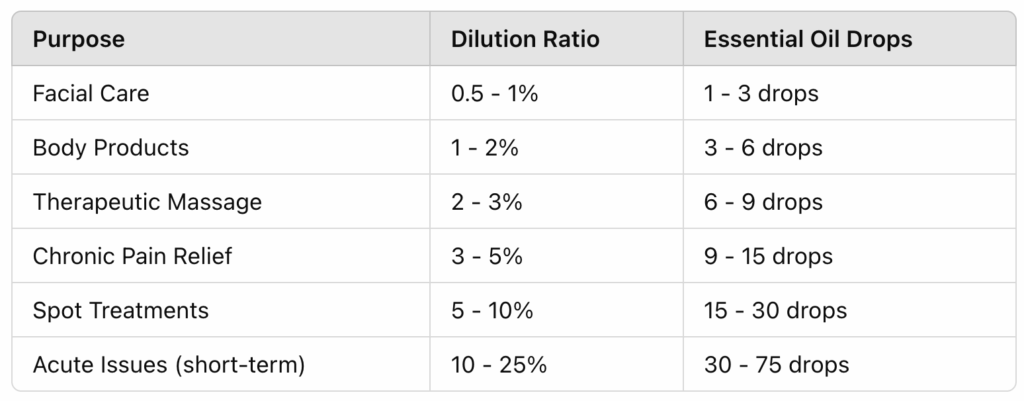
⚠ Important Notes:
- 1% dilution = 1 drop EO per 5mL (1 teaspoon) of carrier oil.
- For sensitive skin, elderly individuals, and children, use lower dilutions (0.25 – 1%).
- For daily use, avoid dilutions over 3% unless working under professional guidance.
How to Calculate Dilution Ratios
Essential oil dilutions are typically calculated using drops per milliliter of carrier oil. The general rule of thumb is:
1% dilution = 1 drop EO per 5mL (1 teaspoon) carrier oil
2% dilution = 2 drops EO per 5mL carrier oil
3% dilution = 3 drops EO per 5mL carrier oil
Formula for Custom Dilutions:
For example, to make a
2% dilution in 30mL (1 oz) carrier oil
:

Adjusting Dilution for Different Applications
1. Facial Care (0.5 – 1%)
Since facial skin is more delicate, low dilutions are required.
✔ Example Facial Serum Blend (1% dilution, 10mL bottle)
- 1 drop Frankincense (skin regeneration)
- 1 drop Rose (hydration)
- 1 drop Helichrysum (anti-aging)
- 10mL Argan Oil (carrier oil for dry skin)
🔹 Application: Apply 1-2 drops to clean skin before moisturizing.
2. Full-Body Massage (2 – 3%)
Massage oils require higher dilution to effectively soothe muscles and joints.
✔ Example Relaxation Massage Oil (2% dilution, 30mL bottle)
- 4 drops Lavender (calming)
- 3 drops Cedarwood (grounding)
- 3 drops Sweet Marjoram (muscle relief)
- 30mL Fractionated Coconut Oil
🔹 Application: Warm oil in hands and massage onto body after showering.
3. Spot Treatment (5 – 10%)
Higher dilutions are used only for targeted areas, like bruises, scars, or acute pain.
✔ Example Scar Healing Roller (5% dilution, 10mL roller bottle)
- 4 drops Helichrysum (wound healing)
- 3 drops Frankincense (cell regeneration)
- 3 drops Carrot Seed (skin repair)
- 10mL Tamanu Oil (carrier oil for scar healing)
🔹 Application: Apply directly to scars 2x daily.
Special Considerations for Safe Blending
1. Phototoxic Essential Oils
Certain citrus oils can cause burns when exposed to sunlight.
⚠ Avoid exceeding NAHA limits for leave-on products:
- Bergamot (Citrus bergamia) – Max 0.4%
- Lemon (Citrus limon) – Max 2%
- Lime (Citrus aurantifolia) – Max 0.7%
✅ Safer Alternatives:
- Use Steam-distilled citrus oils (they are non-phototoxic).
2. Essential Oils to Use with Caution
Some oils require extra care due to their potency.
- HOT OILS (Can cause irritation) – Cinnamon, Clove, Thyme, Oregano
- SENSITIVE SKIN (Use at very low dilutions) – Lemongrass, Peppermint, Eucalyptus
- NEUROTOXIC OILS (Avoid for those with epilepsy) – Rosemary, Sage, Fennel
🛑 When in Doubt?
Start with a lower dilution and patch test on a small area before applying widely.
Key Lesson Concepts:
- Understanding dilution ratios and guidelines is crucial for blending essential oils safely.
- Recommended dilution ratios vary depending on the type of product and intended use.
- Start with a lower dilution ratio and patch test your blends before applying them to larger areas of the body.